Feline Respiratory Panel
Use a feline respiratory PCR panel when clinical signs or exposure history support infectious disease testing.
Submit PCR panels and targeted molecular tests for respiratory, gastrointestinal, dermatophyte, and other infectious disease workups.
Use a feline respiratory PCR panel when clinical signs or exposure history support infectious disease testing.
Submit canine respiratory samples for panel-based molecular detection of listed pathogens.
Submit an appropriate feline GI specimen when a diarrhea workup calls for molecular testing.
Use the canine GI and diarrhea PCR panel for listed gastrointestinal pathogen targets.
Submit hair, skin scrapings, a lesion swab, or a lesion biopsy for listed dermatophyte PCR testing.
Order listed targets such as dermatophyte, Toxoplasma gondii, or Heterobilharzia americana testing.
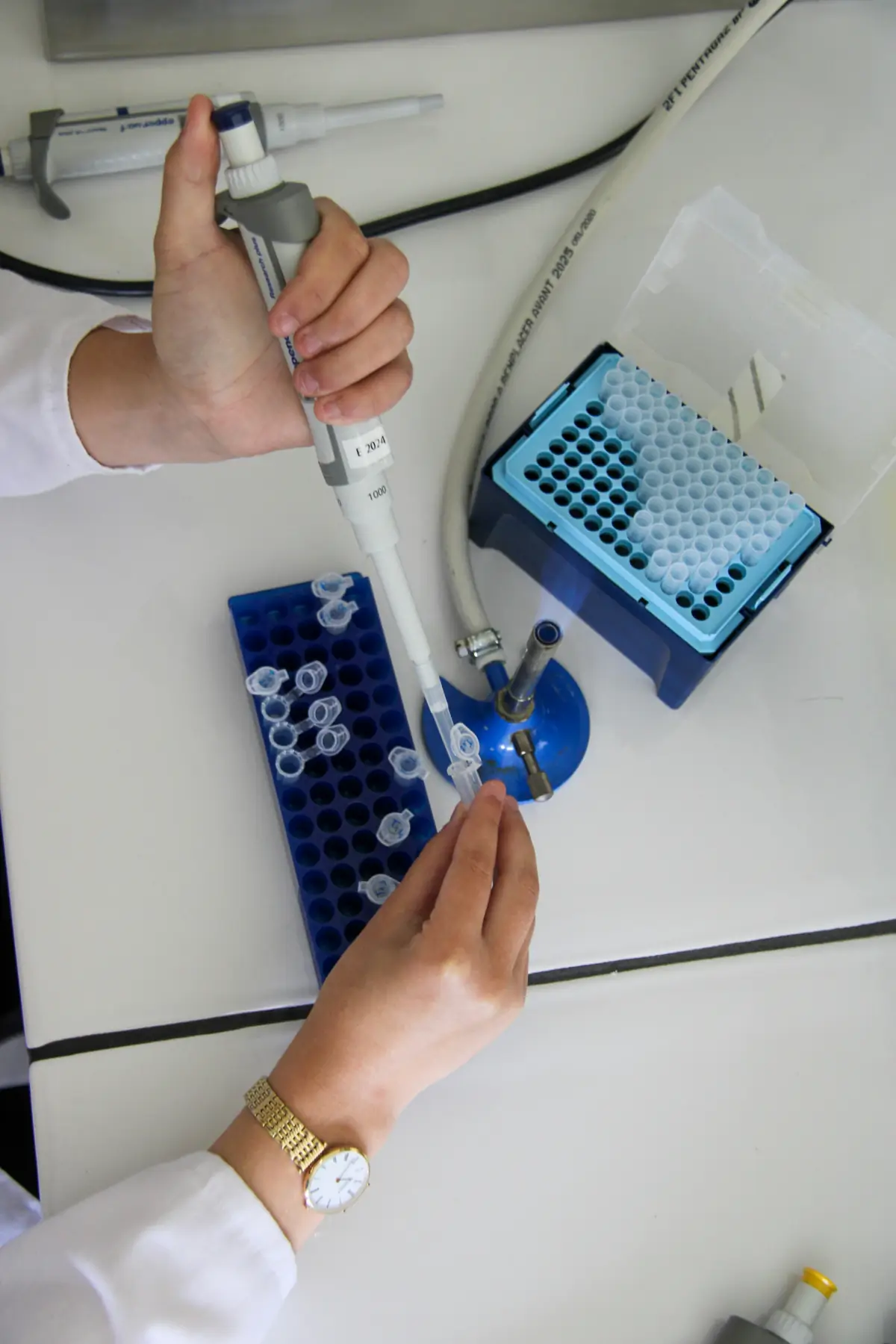
Molecular testing is useful when the case calls for direct detection of pathogen genetic material through a targeted assay or multi-pathogen PCR panel.
Respiratory signs and exposure history support a canine or feline panel.
A diarrhea workup calls for a canine or feline GI PCR panel.
A suspected dermatophyte infection calls for listed molecular testing.
A suspected pathogen matches a targeted molecular test in the B&L menu.
The practice needs help confirming the correct specimen before collection.
PCR performance depends on collecting the right specimen from the right site and preventing degradation or cross-contamination.
Respiratory, GI, blood-borne, dermatophyte, and parasite tests do not use the same specimen. Confirm the exact test before collection.
Choose a representative sample and collect during the clinically relevant stage of disease when possible. Poor site selection can reduce diagnostic value.
Use clean gloves and collection supplies for each patient and site. PCR can detect small amounts of contaminating genetic material.
Use the specified tube, swab, or transport medium and follow the listed temperature and shipping requirements for the selected assay.
Review canine and feline respiratory panels, GI and diarrhea PCR panels, dermatophyte PCR, and other listed molecular targets.
Use the B&L test menu to confirm the panel targets, accepted specimen, collection method, transport medium, storage, and turnaround details.
Search respiratory, GI, dermatophyte, or targeted PCR tests| Test | Code | Turnaround |
|---|---|---|
| Canine Fever of Unknown Origin 1-4 Days | 9008 | |
| Canine GI / Diarrhea PCR Panel 5-7 Days | 9003 | |
| Canine Respiratory Panel 2-5 Days | 9001 | |
| Feline Cytopenia Panel 1-2 days | 9012 | |
| View all 10 related tests | ||
Many practices save 15-30% a month on lab costs. Share your current lab setup, and B&L will review pricing, logistics, PIMS fit, contract timing, and next steps.
Veterinary molecular assays detect targeted pathogen DNA or RNA in an appropriate specimen. B&L lists individual tests and panels for selected respiratory, gastrointestinal, dermatophyte, and parasite-related workups.
Yes. The test menu includes canine and feline respiratory panels and canine and feline GI or diarrhea PCR panels, along with listed targeted molecular tests.
Not by itself. PCR detects targeted genetic material. Results should be interpreted with the specimen type, clinical signs, exposure history, vaccination or treatment history, and other findings.
Check the selected assay in the B&L test menu or contact B&L before collection to confirm the specimen, swab or tube, transport medium, storage, and shipping requirements.